Mighty Instincts
- TypeScript
- OpenCode Plugin
- Python
- npm
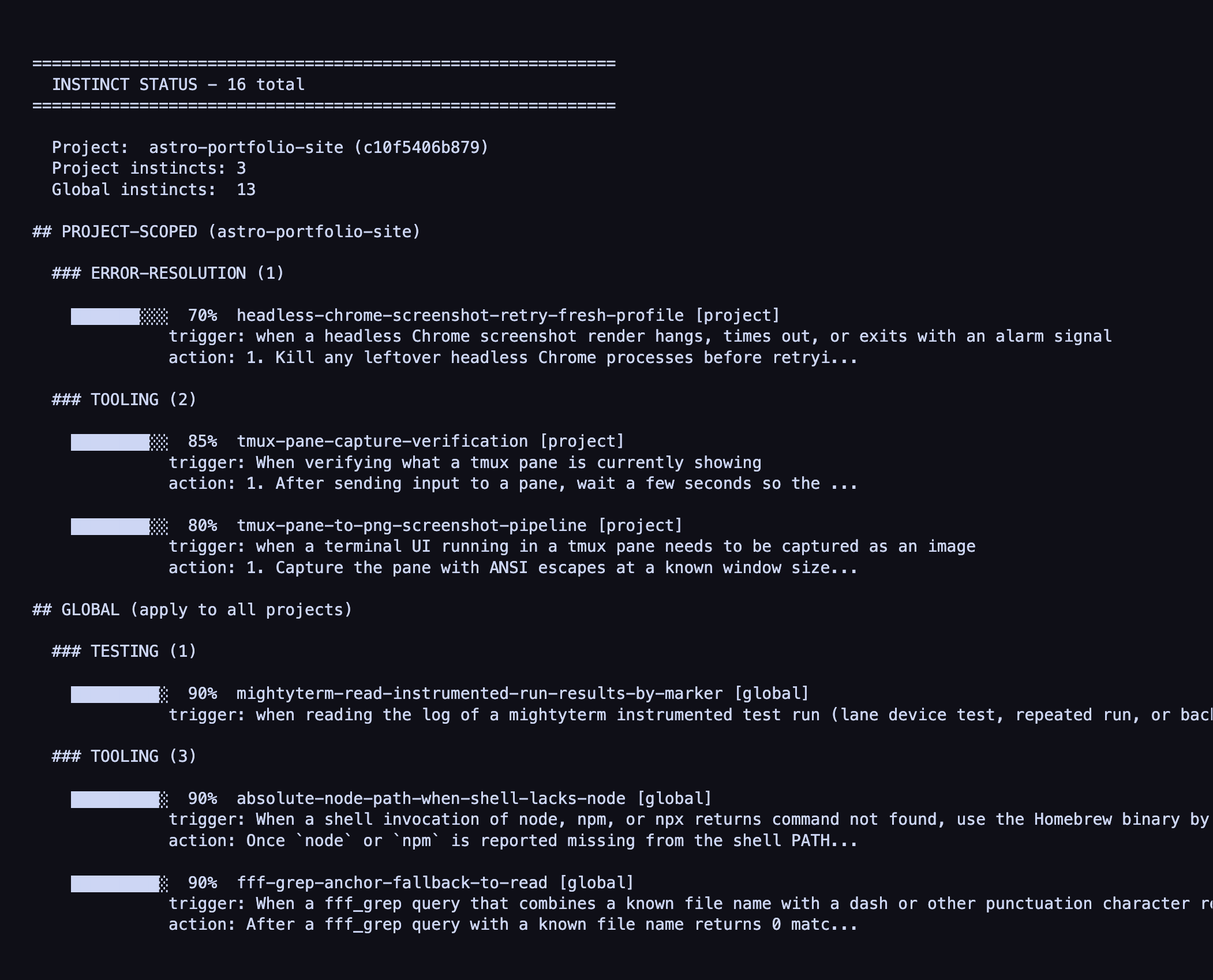
The observer records tool calls and prompts into a per-project log, off by default, and a cheap model periodically distils that log into small, learned instincts. Everything lands in the same on-disk layout as ECC, the continuous-learning project this plugin builds on, using its vendored instinct-cli.py so the data stays compatible with ECC's own tooling and with instincts imported from elsewhere via /instinct-import.
By default, the plugin adds a small instincts block of the highest-confidence, eligible instincts to every outgoing model request, which costs no extra model call since it only reads files the plugin already wrote. A background maintenance loop keeps the instinct files tidy: promoting confident instincts, pruning unused ones, decaying stale confidence, deduplicating overlapping entries, and evolving clusters of related instincts into proposed skill, command, agent, or rule candidates. The observer itself is opt-in, and installing a candidate is never automatic: the loop only proposes, and nothing becomes a real skill, command, agent, or AGENTS.md rule until a slash command installs it.
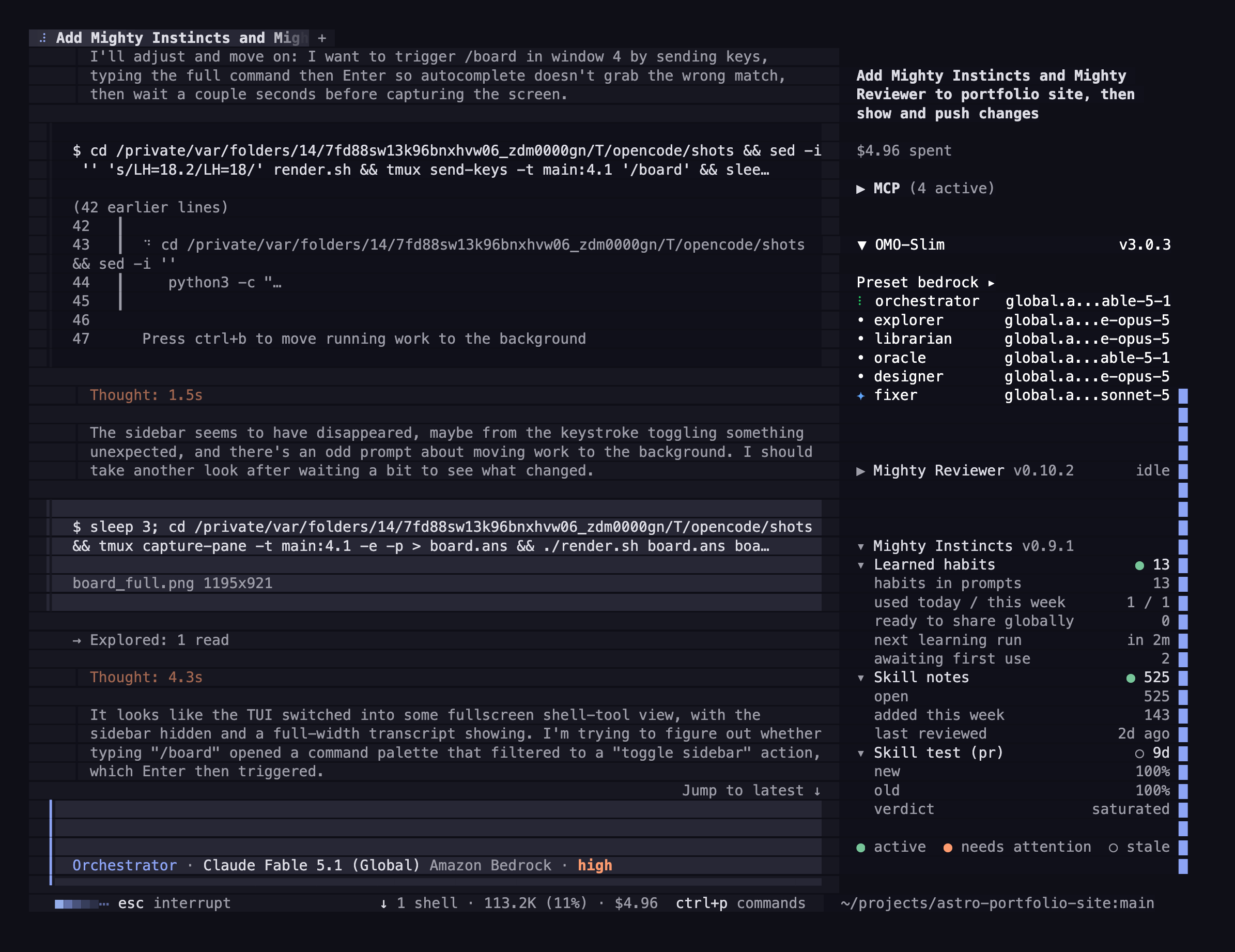
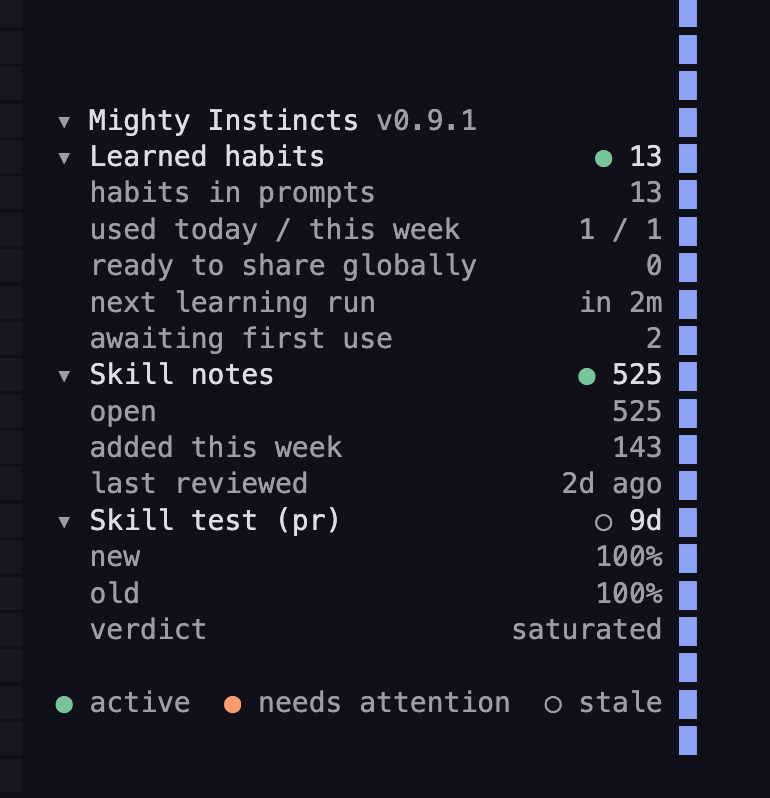
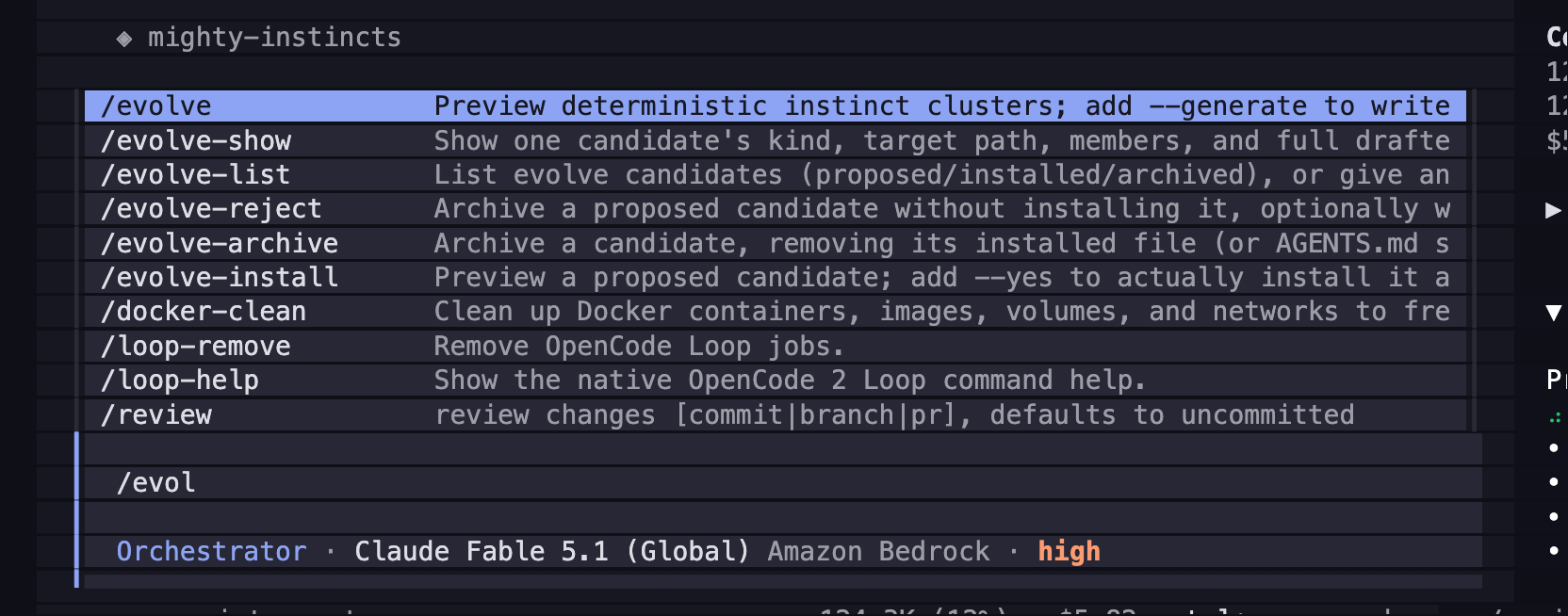
On the OpenCode 2 TUI, a collapsible sidebar board summarises three sections: Learned habits (this plugin's own instincts and observer status), Skill notes (the task-observer skill's open backlog), and Skill test (skill-creator's latest benchmark result). Hosts without a sidebar get the same summary through the /board command instead. Slash commands cover instinct status, import and export, and the evolve lifecycle (/evolve-list, /evolve-install, /evolve-reject). Published on npm as mighty-instincts.
Highlights
- Per-project observer log of tool calls and prompts, distilled into instincts by a cheap model
- Confidence-ranked instincts injected into every model request as a system-context block
- Maintenance loop (promote, prune, decay, dedupe, evolve) that only ever proposes candidates, never installs them
- Collapsible TUI sidebar board (and /board command) summarising habits, skill notes, and skill evals
Architecture
Loading diagram…
Gallery